
Light-coloured floor panels. How to choose the right flooring for your interior?
Whether you’re in the process of finishing a new flat or want to renovate your home, the decision on which flooring to choose is crucial to the final result. Remember, however, to match the colour of the flooring to the overall interior scheme, so it’s a good idea to think about this right from the planning stage – when choosing furniture, doors and wall colours. If you want to enjoy your new floor for many years to come, pay attention not only to the technical specifications but also to the colour of the flooring. It’s a good idea to opt for a versatile, versatile solution. If, after a while, you want to refresh or change the décor, it’s much easier to give the room a makeover by changing the colour of the walls. Laying a new floor involves significantly higher costs and a greater amount of work.
What type of flooring should you choose?
The floor is the part of the interior most prone to damage, so before choosing a colour, it’s worth considering the type of flooring best suited to your needs. There are currently a great many flooring options on the market that guarantee resistance to damage, moisture and wear and tear. So which one should you choose? There is currently a trend towards a return to natural materials, such as wood, cork or designer concrete. Wooden floors and parquet certainly have a refined appearance, and a major advantage is the ability to match the colour to the interior. Simply apply an oil to darken the planks and boards, or paint them in a colour of your choice. This, of course, involves an additional cost on top of the already expensive material. Lovers of natural wooden flooring may be put off by its low resistance to damage and scratches. Sanding – that is, sanding the floor using a sanding machine – comes to the rescue. If you want your wooden floor to look beautiful, it’s worth bearing this in mind from the outset. With wooden flooring, you should also remember to vacuum frequently, as particles left on the boards can scratch them as you walk.
Cork is a 100 per cent natural material and has a host of advantages, including the production process itself, as it does not require trees to be felled. Cork flooring is made from the bark of the cork oak, which is harvested without damaging or harming the tree. Importantly, the layers of bark regenerate. Cork flooring is very light and flexible, and also offers excellent thermal insulation, which can be a plus in rooms where warmth and comfort are valued. Furthermore, it is easy to clean, although it is important to remember to remove stubborn stains straight away, such as those caused by coloured liquids. Unfortunately, this type of flooring also has its drawbacks. Cork exposed to strong sunlight can fade, so it’s worth taking the room’s exposure to sunlight into account when planning your purchase. This material doesn’t attract dust, which can be a huge advantage. However, this doesn’t mean there won’t be any dust in your home; it may simply float in the air. It’s worth bearing this in mind if you share your home with a pet that sheds a lot.
Another interesting interior design solution is the use of concrete. It’s ideal for minimalist interiors and also lends an industrial feel. This material is highly resistant to wear and damage, although, due to its properties, scratches may appear over time. It is also easy to clean and requires no special maintenance, although it is worth considering a sealant to preserve the surface’s attractive appearance. The material itself is very inexpensive, but to achieve the perfect result, it is best to use the services of professionals. A concrete floor is very cold; to remedy this, you can install underfloor heating, but this also involves a significant additional cost.
It’s also worth mentioning the choice of colour in terms of functionality. A light-coloured floor will be more forgiving when it comes to dust build-up. And if you have pets, you should also consider the pet hair that accumulates, which is highly visible on a floor with contrasting colours. Matt or gloss? Of course, this depends on your preferences and the style of your home, but bear in mind that glossy floors require more maintenance.
If you’re looking for practical solutions that mimic natural materials, consider laminate flooring. Thanks to advanced textures embossed into the wear layer, laminate floors resemble natural wood in both appearance and texture, whilst being far more resistant to scratches, stains and dents. Laminate flooring is characterised by its ease of installation – the planks feature a milled ‘click’ joint, which allows for ‘floating’ installation, meaning there’s no need to glue the flooring to the subfloor. You can easily install Vilo laminate flooring yourself – watch the installation video here. Would you like to find out more about laminate flooring? Read the post ‘What is laminate flooring?’.
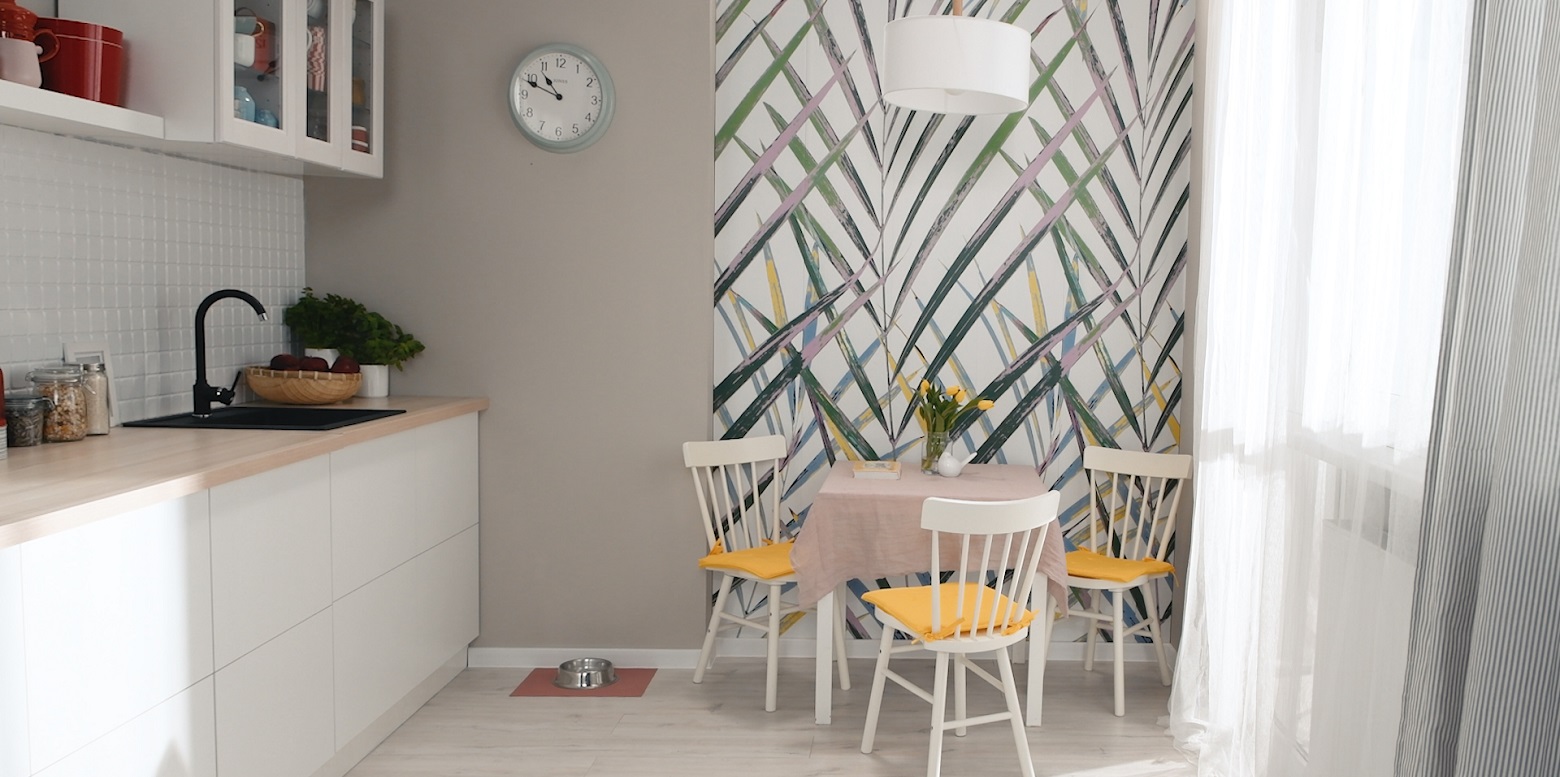
Light-coloured floorboards aren’t just for minimalist interiors
A light-coloured floor is no longer the preserve of minimalist interiors. Its versatility is what makes the difference. Whichever style you choose, a light-coloured floor is a safe bet for years to come, as it adapts very easily to changes in your interior. They’re ideal for small spaces, as they make them appear larger. It can serve as a backdrop for your décor or bring out its desired character. By opting for a light-coloured floor, you have a wider range of options when choosing furniture and accessories. With a dark floor, it’s best to limit the number of accessories. By choosing a versatile solution, you can add character through textiles. If you want to make the interior feel cosier, consider a rug or smaller rugs in a colour that complements the interior.
A light-coloured floor in a loft style? Why not! The subtle colours of the floorboards will blend beautifully with a brick wall. This could be classic red brick or grey, slightly weathered brick. You can read more about brick walls in the post ‘Brick in interiors’.
Light-coloured floor panels. What colour furniture should you choose?
It all depends on the style you like. If you’re a fan of light, Scandinavian-style interiors, go for light-coloured furniture. It could be white combined with grey upholstery. If you want to avoid an interior that’s too stark, steer clear of white walls. You can achieve harmony in the interior by using paints in pastel shades. You can add a bit of life to the space with a ‘home jungle’. And if you’re not afraid of mixing styles and incorporating bolder accents into your interior, you could opt for a dark colour on the wall. In such a scheme, anthracite works perfectly on the most prominent wall, with light grey or off-white on the others. You could also consider decorating the walls with posters; black-and-white prints look great in a monochrome interior, whilst if you’re mixing styles, you might opt for more intense colours or trendy floral motifs. Don’t forget the power of accessories either! Versatile, higher-quality interior pieces will last for years. If you opt for light-coloured floors and furniture, you can always add different styles through accessories. Simply use curtains in a bold colour or add a contrasting lamp. You could stick to more subtle accents, such as patterned cushions.
What about dark furniture in a room with a light-coloured floor? This can also be an interesting combination, but there are a few things to bear in mind with this pairing. Try not to pair white floors and walls with black furniture. Such a contrast can be tiring on the eye. It’s better to opt for anthracite-coloured furniture and add light-coloured accessories to give the interior a sense of lightness. Also, try to avoid choosing dark furniture with decorative elements, as too many details can ‘take away’ from the lightness of a light-coloured floor.

Dark flooring – which interiors does it suit?
A dark-coloured floor is a good choice, particularly for large spaces – it will make the interior appear slightly smaller and, as a result, cosier. Dark wood is ideal for a classic interior, as it adds a touch of elegance. On the other hand, an anthracite or even black floor will emphasise the modern character of the interior. If you opt for a dark floor, paint the walls a light colour, but avoid pure white. This will help you maintain a balance of colours in the room.
A dark floor doesn’t mean you have to avoid dark colours on other elements of the interior. If you like bold interiors, you can certainly try a dark colour on the walls, but limit yourself to a maximum of two walls so as not to overwhelm the space. When choosing furniture and accessories, bear in mind that a dark floor will ‘steal the show’ in the entire room. The colour of the furniture depends on the size of the room, because, just as with the floor itself, dark furniture will make the room appear even smaller.
If you can’t decide which floor to choose, think about matching different shades to the room’s function. An open-plan living room with a light-coloured floor, a cosy bedroom with darker-toned panels, and a welcoming children’s room with a natural, warm wood tone? There are plenty of combinations – tailor them to your interior! Check out the range of Vilo laminate flooring here. Don’t forget to choose the right accessories too – skirting boards and underlay for the flooring.